“You’re pretty for a Black girl”, “White people have no rhythm”, “Latinos have such fiery tempers” – shouldn’t we know when to draw a line between perception and reality?
As long as humankind has been on earth—whether through Darwinism or divine intervention — prejudices have resided at the core of all social interactions and debates. But all our prejudices point to one incontestable fact – that we as human beings are innately wired to be self-appointed judges, juries and purveyors of ‘truth’. Think about it…
We are always trying to determine what others are thinking without asking, to predict and project how one should behave based on certain physiological traits or to assess someone’s character through cultural cues. Yes, as a fellow scholar I could get theoretical and delve into the fields of neuroscience and psychology. I could pontificate about mirror neurons, studies into cognition and the nuances of the human mind or even conduct a cultural analysis on contemporary society citing dead philosophers and critics to illustrate my points. But who am I kidding? If I were to do that, boredom would surely be the order of the day. So let’s skip all of that.
The Issue: To translate or not to translate – that is the question!
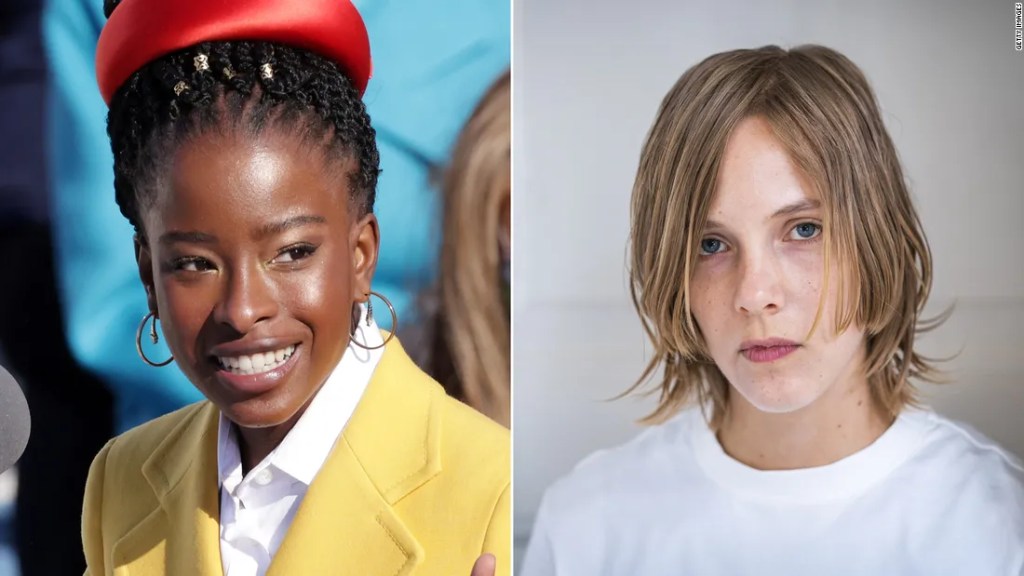
An auspicious event meant to signal an era of change end up spurring discussion about the Black struggle. National Youth Poet Laureate, Amanda Gorman, eloquently spoke to a nation recently ravaged by protests of civil unrest with a call-to-action poem entitled The Hill We Climb. The poem translated into so many facets of life that other nations have resolved to take up the baton and run with it. But is The Hill We Climb — by Amanda Gorman, a “spoken-word artist, [who is] young, female and unapologetically Black” (Activist Janice Deul), a harbinger of peace or of social unrest?
Marieke Lucas Rijneveld, who identifies as non-binary and as such could also be seen as a member of the minority class, was proclaimed unqualified to translate the poem because they are not “unapologetically Black”. Furthermore, spoken word poet and activist Zaire Krieger tweeted “[h]ow salty on a level from one to the Dead Sea am I going to sound when I say that tons of female spoken word artists of color (Babs Gons, Lisette Maneza etc.) could have done this better?” Funnily enough, if it were the reverse, I am sure the Black community would be plotting a riot this time around. So what’s up with the double standard? If being “Black” is necessary to authenticate one’s ability to relate to the struggle, couldn’t it be argued that Rijneveld’s status as a minority also affords them a struggle and consequently the ability to draw strength from their struggles with discrimination to effectively reflect the raw emotions deeply embedded within Gorman’s poem. Wouldn’t that make them more or less qualified?
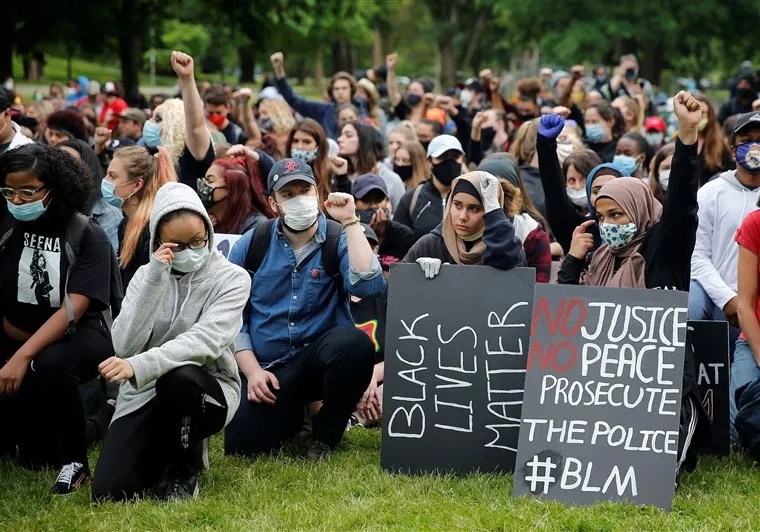
Plus, were Blackness to be a prerequisite for the correct translation of the text simply because it was authored by an African-American, shouldn’t being American also be a prerequisite since the author is young, female, and unapologetically “Black American”? Those familiar with the Black Lives Matter protests, watch them and read about them, will notice that the protests weren’t solely comprised of Blacks – people from all different racial backgrounds were on the ground fighting alongside them. So what’s the difference between holding a poster and holding a pen? Everybody is prejudiced in some way, shape or form. That’s the norm as human beings. But whereas prejudices are common among us, when coupled with snide it transforms into discrimination.
The controversy surrounding the translation of the powerful and highly evocative poem into Dutch fanned the embers of racial rhetoric and ignited flames of heated debates. While Marieke Lucas Rijneveld was celebrating the honour of being granted the opportunity to translate a meaningful literary piece into their native language, their suitability was being questioned not because of capability but due to the colour of their skin. Everyone is entitled to their own opinions. Freedom of speech is the beating heart of democracy but is it morally or ethically right to essentially ‘bully’ someone out of a job on the basis of skin colour?
As civil unrest plagued the tenure of the 45th president, the poem read by its author at the inauguration of the 46th president, Joe Biden, sought to forge a new path to unify and heal the nation. But, how ironic is it that a poem about progressiveness, strength in unity, healing the divide and peace became a source of discontent, controversy and discord in the Netherlands. Gorman, in her poem, rallied for harmony and goodwill as she exclaimed “we will never again sow division”, “[w]e seek harm to none and harmony for all,” “[t]hen victory won’t lie in the blade, but in all the bridges we’ve made”. However, despite the sanctity of her words, some sought to use the sharpness of their own words to act as blades against the bridge of unity and inclusivity to attain ‘victory’.
Whether or not Rijneveld was qualified to accept the task at hand should’ve been judged solely on their own merit rather than on something as impractical as skin colour. However, rather than using just reasons to support the claim of unfitness, the comments shrouded in snide levied against them have overshadowed any shred of validity the activists’ words might’ve had or could’ve had. Yes, using both artists’ outstanding successes and youth as the measuring stick for competence does invite doubt. Plus, it can also be understood that such a selection process would stir some anger. But rather than enquiring about their competence and proficiency, the comments made against them instead revealed preconceived notions about race and racial identity that tended more towards bigotry and discrimination than anything else. Moreover, the comments suggest that the main if not only criteria necessary to qualify for the job is to be a “female word artist of colour”, to be “young, female and unapologetically Black”. Isn’t that the epitome of building a house of straws?
In this day and age, one has to be intent on obliterating the goodwill afforded by ‘civility’ and political correctness to argue that one has to be of a certain racial and/or ethnic decent to successfully translate a poem from one language to another. Remember, we are all individuals with our own personal struggles, so if we could simply judge a person’s suitability for a job mainly on ability rather than skin-tone, wouldn’t we be one step closer to creating the world described in Gorman’s poem?
 Casting a long Shadow
Leave a comment